From skin preparation to bridal makeup and client communication — explore the essential skills taught in make up courses and how they can help you begin your career with confidence, with TRIQOS.
Trusted by Industry Leaders






The right makeup skills can turn your passion for beauty into a professional career. Makeup is more than applying foundation, lipstick or eyeshadow.
A professional makeup artist needs creativity, technical knowledge, communication skills and an understanding of different clients and their needs. For beginners, choosing the right make up courses can provide a structured way to learn these skills and understand how the professional beauty industry works.
Whether you want to become a bridal makeup artist, freelance makeup artist, salon professional or beauty specialist, proper makeup artist training can help you build a strong foundation. In this guide, we'll explore the essential skills you can develop through professional makeup education and how they can help you begin your career with confidence.
Make up courses are structured training programs designed to teach students the practical and professional skills needed in the makeup and beauty industry.
Depending on the course, students may learn:
A good course combines theoretical knowledge with practical sessions, allowing students to understand both the technique and the reason behind it.
Online tutorials can help beginners explore makeup, but professional training provides a more organised learning experience.
A makeup artist needs to understand different skin types, face shapes, product textures, colour combinations and application techniques.
Professional makeup artist training can help beginners learn these skills step by step instead of relying completely on trial and error.
Training can also introduce students to professional hygiene standards, client communication and industry expectations.
Good makeup starts with properly prepared skin.
Students can learn how to recognise different skin types and select suitable preparation techniques before makeup application.
Cleansing, moisturising and priming can help create a better base for makeup and improve the overall finish.
Creating an even complexion is one of the most important makeup skills.
Students need to understand skin undertones, foundation shades, textures and coverage levels to select suitable products.
Learning how to blend foundation properly can make the final makeup look smoother and more natural.
Eye makeup requires patience and precision.
Professional courses can teach techniques such as eyeshadow blending, eyeliner application, eyebrow definition and lash application.
Students can also learn how to adjust eye makeup according to a client's features and the occasion.
Colour theory plays an important role in professional makeup.
Understanding how different colours work together helps artists select shades that complement a client's skin tone, eyes and overall look.
This knowledge allows artists to create personalised looks instead of simply following popular trends.
Every person has different facial features and proportions.
Makeup artists can use techniques such as contouring and highlighting to create balance and enhance specific features.
The aim is to enhance each person's natural features in a way that feels personal.
Bridal makeup requires attention to detail because the look needs to stay polished throughout an important event.
Students interested in bridal work can learn about long-lasting makeup, skin preparation, photography, lighting and client preferences.
Bridal services also require good time management and communication.
A professional makeup kit can contain many different products and tools.
Students need to understand how different products work and how brushes, sponges and other tools should be used.
Good product knowledge also helps artists build a practical kit without purchasing unnecessary items.
Hygiene is an essential part of professional makeup work.
Makeup artists work closely with clients and use products around sensitive areas such as the eyes and lips.
Professional training should therefore cover brush cleaning, product handling, disposable tools and safe application practices.
Technical ability is only one part of becoming a successful makeup artist. You also need to understand your client.
Some clients may have a specific look in mind, while others may want professional guidance about what suits their features and occasion. Good communication allows artists to understand expectations before beginning the service.
Important communication skills include:
A positive client experience can also encourage repeat bookings and referrals.

Watching tutorials is different from working on real faces. Regular practice can help beginners improve their technique, speed and confidence.
The beauty market offers countless products, which can be confusing for beginners. Learning product basics can help students make practical choices when building their professional kit.
Beauty trends change regularly. However, professional artists should focus on strong fundamentals rather than depending completely on short-term trends.
New artists may feel nervous when working with clients. Hands-on practice and professional guidance can gradually improve confidence and consistency.
Choosing the right course is an important step because your training can influence your professional foundation.
Look for training that covers practical areas such as complexion, eye makeup, skin preparation, bridal makeup, hygiene and client handling.
Makeup is a hands-on profession. Practical sessions allow students to apply techniques, receive guidance and understand how different products and methods work on real faces.
Your ideal course depends on what you want to do after training. Someone interested in bridal makeup may need different skills from someone planning to work in a salon, freelance environment or fashion industry.
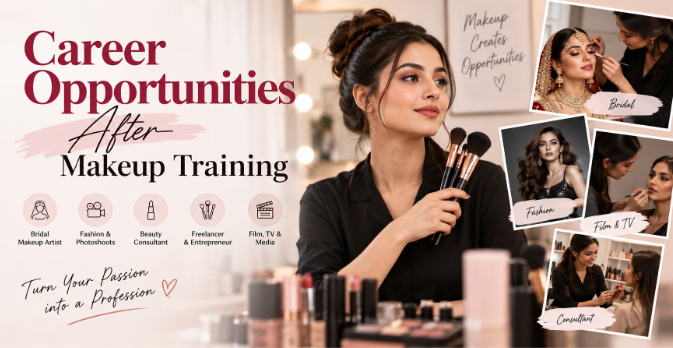
Professional makeup education can open several career paths, including:
With experience, some professionals also choose to establish their own freelance makeup business.
Completing a course is only the beginning. Continued practice and professional development are equally important.
A portfolio allows potential clients to see your work. Showcase different makeup styles and, where appropriate, demonstrate your ability to work with different skin tones, features and occasions.
Consistent practice can improve speed, precision and confidence. Try different techniques while continuing to strengthen your basic skills.
Social media can help makeup artists showcase their work and connect with potential clients. High-quality photographs, transformations and useful beauty content can help communicate your skills.
Once you understand professional techniques, you can gradually develop a style that reflects your creativity and attracts the type of clients you want to work with.
The beauty industry continues to change as consumer preferences and digital platforms evolve.
Many clients now prefer personalised beauty experiences instead of simply copying a popular makeup trend.
Social media has also changed how people discover makeup artists. Short-form videos, tutorials, transformations and portfolio content can help professionals reach new audiences.
However, fundamental skills remain important. Trends may change, but knowledge of skin preparation, blending, colour, hygiene and client requirements provides a strong foundation.
Makeup artistry can be a rewarding career for people who enjoy creativity, beauty and working with others.
Professionals can explore different environments, including salons, studios, weddings, photoshoots, fashion projects and freelance services.
However, completing a course alone does not guarantee success. Building a career requires practice, professionalism, communication, creativity and continuous learning.
For someone genuinely interested in the beauty industry, professional training can provide a valuable starting point.
Starting a career in makeup requires more than an interest in beauty. You need practical techniques, product knowledge, creativity, hygiene awareness and strong communication skills. The right make up courses can help beginners develop these abilities through structured learning and practical experience. From skin preparation and complexion techniques to bridal makeup and client communication, every skill contributes to becoming a confident professional. If you are serious about entering the beauty industry, quality makeup artist training with Triqos can be an important first step toward turning your passion into a professional skill.
Common Questions
Make up courses can teach skin preparation, foundation application, colour theory, eye makeup, contouring, highlighting, bridal makeup, hygiene, product knowledge and client communication.
Formal training is not the only way to learn makeup, but professional makeup artist training can provide structured education, practical experience and expert guidance.
Beginners should start with skin preparation, complexion matching, blending, colour theory and hygiene. Strong fundamentals make advanced techniques easier to learn.
A course can provide the foundation needed to begin your career. However, regular practice, portfolio development, client experience and continued learning are also important.
Yes. Many makeup courses introduce beginners to essential techniques step by step, helping them develop practical skills and confidence.
You can explore careers as a freelance makeup artist, bridal makeup artist, salon professional, beauty consultant, fashion makeup artist, editorial artist or makeup educator.
The learning period depends on the course and individual practice. Developing professional consistency and speed requires regular hands-on experience.
Look for a practical curriculum, experienced instructors, hands-on training, hygiene education and skills that match your career goals.
Yes. Makeup artists can offer services for weddings, events, photoshoots and other occasions. A strong portfolio and professional reputation can help attract clients.
Makeup artists work closely with clients and use products around sensitive areas. Proper sanitation, clean tools and safe product handling are essential for professional services.
Usually replies instantly
Experience world-class training firsthand.